-
How to Ride a Dragon in Crimson Desert
The Blackstar dragon is one of the most exciting mounts in Crimson Desert. It lets you fly across Pywel, attack enemies from the air, and clear enemy camps with fire-based attacks. But you do not unlock it early, and the game does not simply hand it to you after the first encounter.
To get the Blackstar dragon mount in Crimson Desert, you must first meet and cleanse Blackstar during Chapter 9, then progress to Chapter 11 and complete the Golden Star boss sequence. After that, return to the Nest of Valor to unlock Blackstar as a permanent summonable mount.
This guide explains every step, including the Stamina requirement, the Chapter 9 riding sequence, the Chapter 11 boss fight, and how Blackstar works once unlocked.
Quick answer: how to unlock the dragon mount in Crimson Desert
You unlock the Blackstar dragon mount near the end of Chapter 11.
Here is the basic process:
* Progress through the main story until Chapter 9.
* Complete the Shattered Stars quest chain in Urdavah.
* Make sure your Stamina is at least Level 5.
* Ride and cleanse Blackstar during the Chapter 9 sequence.
* Continue the story until Chapter 11.
* Defeat the Golden Star boss during the Foreboding Shadow quest chain.
* Return to the Nest of Valor.
* Blackstar becomes your permanent dragon mount.
Spoiler warning: This guide includes story details from Chapter 9 and Chapter 11.
When do you first meet Blackstar?
You first encounter Blackstar during Chapter 9 as part of the Shattered Stars quest chain. This section takes you to Urdavah, where you find the wounded dragon and remove a spear from its body during a story cutscene.
At this point, Blackstar is not your mount yet. The scene only introduces the dragon and sets up the next part of the unlock process. After the cutscene, you will need to return to Urdavah and complete a riding sequence to cleanse Blackstar.
Before you start: level your Stamina to Level 5
Do not start the Blackstar riding sequence unless your Stamina is at least Level 5.
This is the most important requirement in the entire process. During the Chapter 9 sequence, you must perform an Aerial Maneuver after grappling onto Blackstar. That move costs 200 Stamina, so you will not be able to complete the objective if your Stamina is too low.
If the sequence feels impossible, check your Stamina first. In most cases, the issue is not your timing. It is that your character does not have enough Stamina to perform the required action.
How to ride and cleanse Blackstar in Chapter 9
After the first Blackstar cutscene, return to Urdavah. When you are close enough, open the pause menu and look for the “Wait” option. Selecting it moves you to the battlements, where Blackstar will fly toward you.
Here is what to do:
* Wait for Blackstar to approach the battlements.
* Jump and glide as the dragon passes below you.
* Use Axiom Force to grapple onto Blackstar’s back.
* Immediately press the jump button to perform the Aerial Maneuver.
* Hold the “Resist” prompt whenever Blackstar dives, twists, or rolls.
* When prompted, activate Focus.
* Charge Force Palm.
* Aim at the glowing mark on Blackstar’s back and release the attack.
If done correctly, this purifies Blackstar. The dragon will fly away afterward, but you still have more story to complete before it becomes your permanent mount.
Why can’t I complete the Blackstar riding sequence?
If you are stuck during the Chapter 9 dragon sequence, check these common issues.
Your Stamina may be too low. You need Stamina Level 5 because the Aerial Maneuver costs 200 Stamina.
You may be grappling too late. Jump and glide before Blackstar is directly below you so you have enough time to target its back.
You may not be pressing jump after grappling. Latching on is not enough. You need to trigger the Aerial Maneuver immediately.
You may be missing the Resist prompt. Hold the prompt when Blackstar dives or rolls. If you ignore it, you may lose your grip.
You may be releasing Force Palm too early. Wait until the attack is charged and the glowing target appears on Blackstar’s back.
How to unlock Blackstar permanently in Chapter 11
Blackstar becomes a permanent mount during Chapter 11, not Chapter 9.
Continue the main story until you reach the Foreboding Shadow quest chain. This sends you to Delesyia, where you eventually fight Golden Star, a mechanical dragon boss.
Golden Star uses heavy attacks such as flame tornadoes and explosive barrages, so keep moving and avoid staying directly in front of it for too long. When the boss becomes immobile, throw spears to deal major damage. This is one of the fastest ways to push the fight forward.
Once you reduce Golden Star’s health enough, Blackstar appears and helps finish the encounter. After the battle, return to the Nest of Valor, the location connected to your earlier Chapter 9 sequence. Blackstar will be waiting there. From that point on, it becomes your permanent dragon mount.
Can you use Blackstar anywhere?
Blackstar can be summoned while exploring Pywel, but there are limits. You cannot freely use it in every location, and it cannot be summoned inside the Abyss realm.
The dragon is extremely powerful, so the game limits both how long and how often you can use it. Blackstar can only be used for 15 minutes at a time, and after that, it has a 60-minute cooldown before you can summon it again.
Because of this, Blackstar is best treated as a high-impact mount for long-distance travel, enemy camps, and large outdoor fights rather than something you rely on every few minutes.
Blackstar dragon abilities and controls
Once unlocked, Blackstar gives you both flight and combat options.
Blackstar can:
* Fly across the open world
* Shoot fireballs
* Lock onto targets for multiple fireball attacks
* Use fire breath at close range
* Perform mid-air evasive rolls
* Clear enemy camps quickly
The lock-on fireball attack may not always behave consistently, so fire breath and direct fireball attacks are often more reliable when fighting groups of enemies.
Blackstar is powerful, but its use is limited. Each summon lasts up to 15 minutes, followed by a 60-minute real-time cooldown. Save it for major travel routes, large outdoor fights, or clearing enemy camps when you want to make the most of its short active window.
Can you give armor to Blackstar?
Yes. After unlocking Blackstar, you can later craft the Abyssal Dragon Armor, a late-game upgrade that changes Blackstar’s appearance into a more mechanical, armored dragon.
This does not unlock a new dragon mount. It is armor for Blackstar. To get it, you need to progress well into Chapter 11, defeat the Golden Star boss, and then follow the Flight: Wings of Iron quest under the Faction Quests: Hernand - The Witches tab.
The process is not very clearly explained in-game. In short, you need to craft the Small Kuku ATAG first, then use it as part of the recipe for the Abyssal Dragon Armor. Important materials include a Kuku Iron Pot, Abyss Cells, Cogwheels, Small Batteries, Golden Star’s Component, Core: Ore of Resipiscence, and Aeserion’s Scale. The Golden Star’s Component is received after defeating Golden Star in Chapter 11.
Once the armor is crafted, track Flight: Wings of Iron and return to the Nest of Valor. Walk to the marked spot to trigger a cutscene, and Blackstar will receive the Abyssal Dragon Armor.
Are there other flying dragon or wyvern mounts?
For now, Blackstar appears to be the only flying dragon mount available in the current version of Crimson Desert.
Some sources mention other possible flying mounts, including the Abyssal Dragon, Ember Wyvern, Highland Wyvern, and Storm Drake. However, those mounts do not appear to be available as rideable flying dragon or wyvern mounts at this time.
The confusion likely comes from pre-release trailers and promotional footage, which showed the player character riding other dragon-like or wyvern-like creatures. Those scenes suggested that more flying mounts could exist in the full game, but so far, Blackstar is the only confirmed flying dragon mount players can actually unlock and use.
That may change in future updates, DLC, or post-launch content. For now, though, if you want a flying dragon mount in Crimson Desert, Blackstar is the one to get.
Conclusion
The Blackstar dragon mount is not an early-game reward in Crimson Desert. You first meet the dragon in Chapter 9, but the permanent unlock does not happen until Chapter 11. The key requirement is Stamina Level 5, which allows you to complete the riding and cleansing sequence in Urdavah.
Once you defeat Golden Star and return to the Nest of Valor, Blackstar becomes one of the most powerful mounts in the game. It can fly across Pywel, attack enemies from the air, and make exploration feel much faster. Just remember that Blackstar can only be used for 15 minutes at a time and has a 60-minute cooldown after each use.
https://www.youtube.com/watch?v=hZxabvs4K1E
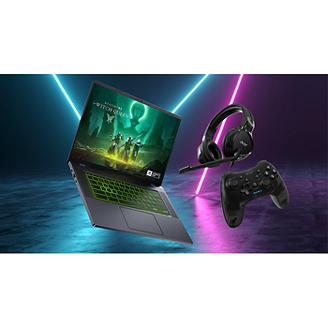
If you are exploring Pywel, fighting large enemies, and want a PC that can keep up with modern open-world games, Acer has a full lineup of powerful and affordable gaming laptops. One strong option is the Acer's best selling budget gaming laptop of 2026, the Acer Nitro V 16 AI.
Key specs include:
* Windows 11 Home
* AMD Ryzen™ 7 350 processor, octa-core 2 GHz
* NVIDIA® GeForce RTX™ 5060 with 8 GB dedicated memory
* 16" WUXGA (1920 x 1200) 16:10 IPS display with 180 Hz refresh rate
* 16 GB DDR5 SDRAM
* 1 TB SSD
If you’re looking for a new powerful yet affordable gaming laptop, check out the Acer Nitro V 16 AI today!
FAQ
What chapter do you get the dragon mount in Crimson Desert?
You unlock Blackstar as a permanent dragon mount in Chapter 11 after completing the Golden Star boss sequence and returning to the Nest of Valor.
Do you ride Blackstar before Chapter 11?
Yes. You ride and cleanse Blackstar during Chapter 9, but it does not become your permanent mount at that point.
What Stamina level do you need for Blackstar?
You need Stamina Level 5 or higher. The Chapter 9 riding sequence requires an Aerial Maneuver that costs 200 Stamina.
Where do you unlock Blackstar?
The process starts in Urdavah during Chapter 9. The permanent unlock happens later, after the Chapter 11 Golden Star boss fight, when you return to the Nest of Valor.
Can you summon Blackstar in the Abyss?
No. Blackstar can be used while exploring Pywel, but it cannot be summoned inside the Abyss realm.
Are there other flying dragon or wyvern mounts in Crimson Desert?
No. Blackstar is currently the only rideable flying dragon mount in Crimson Desert. Other names like Abyssal Dragon, Ember Wyvern, Highland Wyvern, and Storm Drake appear online, but they are not available as rideable mounts in the current version.
Recommended Products
Acer Nitro V 16 AI
(RTX 5060)
Buy Now
Predator Helios Neo 16 AI
(RTX 5070)
Buy Now
Predator Helios 18 AI
(RTX 5080)
Buy Now
-
What is the Best Monitor Size for an Office Monitor?
If you are searching for the best monitor size for office work, this guide covers the ideal screen sizes, resolutions, workspace considerations, and features that matter when choosing an office monitor. Size matters, but it is only one piece of the puzzle. The best computer monitors for work also depend on resolution, desk space, comfort, connectivity, and the kind of work you actually do every day.
Office work has transformed over the last decade. Many people no longer sit with one Word document open on a small screen. Modern desk workers are juggling spreadsheets, browser tabs, Teams calls, PDFs, dashboards, email windows, and the occasional mystery Excel file that nobody wants ownership of. With all of these changes, monitor choice has become far more important.
For most users, a 27-inch monitor is now the sweet spot. It offers enough room for multitasking without overwhelming the desk, making it one of the best monitors for home office environments and everyday productivity setups. That said, smaller and larger displays still have their place.
Why a 27-inch monitor is usually the best choice
For general office use, a 27-inch monitor is usually the safest recommendation.
At this size, users gain enough workspace to comfortably place documents side by side, keep communication apps visible, and work across larger spreadsheets without constantly switching windows. A 27-inch office monitor feels noticeably more spacious than older 22-inch or 24-inch displays, but it still fits most desks comfortably.
It also works well for mixed workflows. Someone spending the day moving between documents, email, video meetings, spreadsheets, and web applications will usually benefit from the extra space immediately. However, size alone is not enough. Resolution matters too.
A 27-inch screen paired with Full HD resolution can work, but many users prefer QHD (2560 × 1440) because it improves clarity and gives more usable workspace. Text appears sharper, icons look cleaner, and there is simply more room for information. For many users, this combination represents the best monitor size and resolution balance for office work.
When does a 24-inch monitor make sense?
Bigger is not automatically better. A 24-inch office monitor still works extremely well for compact desks, student rooms, shared spaces, reception areas, and lighter workloads. If your daily routine revolves around email, browsing, documents, video calls, and standard office applications, a 24-inch display can still feel perfectly comfortable. This size also pairs naturally with Full HD resolution because pixel density remains relatively high. Text generally stays crisp and readable, which is important when staring at spreadsheets and documents all day.
Smaller displays can also improve comfort in tighter environments. Not every desk has room for a larger panel, and not everyone wants one dominating their workspace. For people building simple or minimalist setups, a 24-inch office monitor often remains one of the best value choices available.
When should you move up to 32 inches?
A 32-inch monitor begins moving into more specialized productivity territory.
Larger displays become useful when workloads involve bigger spreadsheets, dashboards, creative applications, editing timelines, financial reports, or multiple windows visible at once. More screen space means less scrolling and fewer interruptions while working.
However, larger screens introduce another factor: pixel density. This is where people sometimes make mistakes. A large monitor with low resolution can actually feel worse than a smaller display because text becomes softer and workspace efficiency drops. You don’t want to find yourself swimming in a sea of pixels!
For example, a 32-inch Full HD display may appear less sharp because the pixels are spread over a larger area. Many users prefer QHD or even 4K at this size to maintain clarity. Desk depth matters too. A larger screen usually benefits from more viewing distance. Otherwise, users may spend the day moving their heads around like they are watching tennis.
Are ultrawide monitors good for office work?
Ultrawide monitors have become increasingly popular among people who inhabit spreadsheets and browser tabs. Most office monitors use a 16:9 aspect ratio, which works well for general productivity, meetings, documents, and mixed workloads. Ultrawides often use 21:9, giving users much more horizontal space that can be genuinely useful.
Instead of stacking windows or constantly switching tasks, users can keep multiple applications visible side by side. A spreadsheet, browser, Teams chat, and reference document can all remain open at once. This makes ultrawide displays especially useful for analysts, programmers, content creators, finance professionals, and heavy multitaskers.
They can also replace dual-monitor setups while removing the bezel gap in the middle. The downside is practicality. Ultrawides need more desk space and generally cost more than standard displays. For many people, a traditional 27-inch monitor remains the simpler and more affordable option.
Why resolution matters as much as size
One of the biggest mistakes buyers make is assuming a bigger monitor automatically gives more usable space. Monitor size and resolution work together. A large screen with insufficient resolution can feel cramped or blurry, while a smaller screen with higher pixel density may appear sharper and more comfortable.
A rough guide looks like this: a 24-inch monitor pairs naturally with Full HD (1920 × 1080), while a 27-inch monitor often hits its sweet spot with QHD resolution (2560 × 1440). Larger 32-inch displays usually benefit more from QHD (2560 × 1440) or 4K UHD (3840 × 2160) to keep text sharp and make better use of the extra screen space. Text clarity matters because office work usually means staring at words and numbers for hours. Better pixel density generally improves readability, sharpness, and comfort.
Practical setup considerations
The best work monitor also depends on the physical workspace around it.
Desk size is the obvious factor. A larger monitor sounds appealing until it arrives and occupies half the desk. Viewing distance matters too, particularly with larger displays.
Ergonomics are equally important. Features such as height adjustment, tilt, swivel support, and VESA mounting can make a bigger difference to comfort than an extra inch of screen size. VESA mounting support is especially useful because it allows monitor arms and more flexible positioning while freeing desk space. If you spend eight hours a day at the screen, comfort becomes productivity.
Connectivity matters more than ever
Connectivity rarely feels exciting when buying a monitor, but people notice it very quickly once the setup reaches the desk. Modern office setups increasingly revolve around laptops, docking stations, and hybrid work. USB-C has become particularly useful because one cable can often carry video, data, and power simultaneously. For laptop users, that can dramatically simplify cable management and docking. HDMI remains common and works perfectly well for most users, while DisplayPort is still widely used in professional environments.
What about panel type, refresh rate, and eye comfort?
For office work, IPS panels are usually the preferred choice because they offer wider viewing angles and more consistent color reproduction. This helps keep documents, charts, presentations, and images looking more uniform across the screen, which is especially useful in shared workspaces or when moving between applications. IPS displays are also generally favored for creative work because they tend to provide better color accuracy and more reliable color consistency.
VA and TN panels still appear in some budget office monitors and can remain perfectly usable depending on workload. VA panels often provide stronger contrast, while TN displays are usually more affordable and can still work well for basic productivity tasks. Refresh rate matters less in the office than it does for gaming, but moving from 60 Hz to 75 Hz or higher can still make scrolling, cursor movement, and general desktop use feel smoother.
Creative users may also want to pay attention to color accuracy specifications, color gamut coverage, and factory calibration if photo editing, design work, or content creation are part of the workflow. Eye comfort features are worth considering too. Anti-glare coatings help reduce reflections from windows and office lighting, while flicker-free technology and low blue light modes may help reduce fatigue during longer work sessions.
One large monitor vs dual monitors
For general office work, one larger monitor is often the simpler choice. A 27-inch display can comfortably handle email, documents, browser windows, video calls, and spreadsheets side by side without needing extra hardware or cables.
Dual monitors become more useful when tasks naturally split across screens. Someone in finance might keep dashboards and spreadsheets open on one display while using the second for communication tools. Customer support teams may keep ticket systems on one screen and knowledge bases on another. Writers and researchers often work with source material on one monitor and documents on the other.
Ultrawide displays sit somewhere in the middle. They provide a similar side-by-side workflow while keeping everything on one screen. For many users, a single larger office monitor is enough. Heavy multitaskers may still benefit from dual displays.
Display decisions
For most people, a 27-inch monitor remains the best monitor size for office work because it balances space, clarity, and practicality without overwhelming the desk. It is also why many of the best monitors for home office setups tend to land around this size.
If you are shopping within the Acer lineup, the Acer CB3 Business Monitor – CB273U BEMIPRUZX is a solid example of this sweet spot, pairing a 27-inch WQHD IPS display with USB-C connectivity and extra workspace for productivity.
Users wanting a simpler, budget everyday setup could look at the 23.8" Full HD (1920 x 1080) Acer CS2 Smart Monitor – CS242Y WEMIIIRX. While those dealing with large spreadsheets, creative projects, or heavier multitasking may prefer the Acer CB2 Business Monitor – CB322QK SEMIPRUZX with its larger 31.5-inch 4K panel.
Ultimately, the best computer monitors for work are not simply the biggest or most expensive. The right office monitor balances size, clarity, comfort, connectivity, productivity, and value around the way you actually work.
FAQs
What is the best monitor size for office work?
For most users, a 27-inch monitor is usually the best monitor size for office work because it offers enough space for multitasking while still fitting comfortably on most desks.
Is a 24-inch monitor big enough for office work?
Yes. A 24-inch office monitor works well for smaller desks, student setups, reception areas, and general tasks such as email, browsing, documents, and video calls.
Is a 32-inch monitor too big for office work?
Not necessarily. A 32-inch monitor can work very well for spreadsheets, dashboards, creative applications, and multitasking, especially when paired with higher resolutions such as QHD or 4K.
Are ultrawide monitors good for office work?
Yes. Ultrawide office monitors are useful for heavy multitasking because they provide more horizontal workspace for side-by-side windows, spreadsheets, browsers, and communication apps.
What resolution is best for office monitors?
Full HD works well for many 24-inch displays, while 27-inch monitors often benefit from QHD resolution. Larger 32-inch monitors usually perform better with QHD or 4K for improved text clarity.
Is one large monitor better than dual monitors?
It depends on workflow. One larger monitor often creates a cleaner setup, while dual monitors can help users who regularly separate communication, documents, and primary work tasks across different screens.
Recommended Products
23.8" Acer CS2 Smart Monitor
Buy Now
27" Acer CB3 Business Monitor
Buy Now
31.5" Acer CB2 Business Monitor
Buy Now
-
Acer at Computex 2026: 4 More Products to See
Acer will showcase more than 50 products at COMPUTEX 2026, covering AI PCs, gaming, commercial enterprise solutions, and AI solutions from Acer subsidiaries. In addition to the Predator and Nitro gaming products already highlighted, visitors should also look for the Predator Atlas 8, Acer Aspire X 16 AI, Acer Swift Air 14, and Acer Veriton RA110 AI Mini Workstation.
Business visitors can attend COMPUTEX from June 2 to 4, while June 5 is open to the general public. Visitors can find Acer at Taipei Nangang Exhibition Center Hall 1, 4th floor, Booth No. L0802, with additional subsidiary showcases and product demos in Meeting Room 402.
Acer at COMPUTEX 2026 part 2
COMPUTEX 2026 takes place from June 2 to June 5 in Taipei, bringing together major technology brands, buyers, media, PC enthusiasts, and business professionals. This year’s theme, “AI Together,” fits closely with Acer’s broad showcase across AI PCs, gaming hardware, commercial enterprise solutions, and AI-driven products from Acer subsidiaries.
Event details:
* Dates: June 2–5, 2026
* Acer location: Taipei Nangang Exhibition Center Hall 1
* Acer official booth: 4th floor, Booth No. L0802
* Additional Acer demos: Meeting Room 402
* Visitor access: June 2–4 for business visitors; June 5 open to the general public
Acer will showcase more than 50 products at the event, a fitting milestone during the company’s 50th anniversary year. The number reflects the breadth of Acer’s current portfolio, giving visitors a chance to explore new devices across several categories. Some products are built for gaming and entertainment. Others focus on productivity, portability, AI-assisted workflows, business use, and workstation-class performance.
In our earlierAcer Computex 2026 preview, we highlighted four gaming-focused products to see at the show: the Predator Helios Neo 16S AI, Predator X34 QD-OLED, Nitro V 16 AI, and Nitro XV0 gaming monitor series.
This follow-up takes a wider look at Acer’s COMPUTEX 2026 lineup. Instead of focusing only on gaming laptops and monitors, part 2 covers four products across handheld gaming, everyday AI PCs, thin-and-light mobility, and compact workstation performance.
Four more Acer products to check out
Acer’s COMPUTEX showcase includes more than one type of device. After looking at several gaming-focused products, this follow-up highlights four additional Acer products across gaming, AI PCs, mobility, and workstation performance:
* Predator Atlas 8
* Acer Swift Air 14
* Acer Aspire X 16 AI
* Acer Veriton RA110 AI Mini Workstation
1. Predator Atlas 8: Full Windows gaming in a handheld PC
The Predator Atlas 8 is Acer’s first Predator gaming handheld, built for players who want full Windows PC gaming in a portable format. Instead of being tied to a closed console ecosystem, it runs Windows 11 Home, giving users access to PC game libraries, launchers, and services such as Xbox Game Pass where available.
Performance is a major part of the appeal. The Predator Atlas 8 is available with up to an Intel Arc G3 Extreme processor, Intel Arc Xe3 graphics, up to 24 GB of LPDDR5x memory, and up to 1 TB of PCIe Gen 4 NVMe storage. It also supports Intel XeSS 3 technology, which uses AI-powered upscaling and multi-frame generation to help supported games run more smoothly.
https://www.youtube.com/watch?v=783HLDMrRDs&t=1s
The handheld design is also worth trying in person at COMPUTEX 2026. Its 8-inch FHD+ 1920 × 1200 touch display uses a 16:10 aspect ratio, a 120 Hz refresh rate, VRR support, 500 nits of peak brightness, and 100% sRGB color coverage. The taller 16:10 screen gives PC games more room for maps, menus, inventories, and HUD elements, which can make handheld play feel less cramped.
Acer also built the Predator Atlas 8 around handheld-first controls. It includes full-size analog sticks, Hall-effect analog triggers, rear macro buttons, adjustable trigger modes, and a contoured grip with anti-slip texture. Players can switch between faster micro-switch trigger response for shooters and full-travel analog control for racing games, flight sims, and other genres that benefit from more precise input.
For longer sessions, the Predator Atlas 8 includes Predator AeroBlade cooling with dual-fan airflow and Vortex Flow tuning. It also supports up to 80 Whrs of battery capacity, Wi-Fi 7, Bluetooth 5.4, dual Thunderbolt 4 ports, UHS-II microSD support, DTS:X Ultra audio, dual speakers, dual microphones, and Acer PurifiedVoice.
For COMPUTEX visitors, the Predator Atlas 8 is one of the most interesting products to try hands-on because comfort, controls, screen size, weight, cooling, and Windows navigation matter much more in person than they do on a spec sheet.
2. Acer Swift Air 14: A lighter laptop for everyday mobility
The Acer Swift Air 14 brings a different kind of appeal to Acer’s COMPUTEX 2026 lineup. Where some devices are built to show maximum performance, the Swift Air 14 is about portability, style, and daily convenience.
Its all-aluminum chassis is slim, lightweight, and made for people who carry their laptop between classes, meetings, cafés, flights, and home. The CNC diamond-cut cover gives it a more refined look, while the 180° hinge lets the screen open flat for easier sharing during group work, presentations, or casual viewing.
The Swift Air 14 is also designed for everyday entertainment. Its 14-inch display supports 100% sRGB color and a smooth 120 Hz refresh rate, while quad speakers and DTS:X Ultra audio help make video, music, and calls feel more immersive than expected from a compact laptop.
https://www.youtube.com/watch?v=FllwaSwPr-0
For performance, the laptop uses an Intel Core Series 3 processor, up to 16 GB of LPDDR5 memory, up to 512 GB of SSD storage, and a built-in NPU for AI-enhanced experiences. It is not trying to replace a gaming laptop or workstation. Instead, it is meant for the daily work most people actually do: browsing, documents, video calls, streaming, schoolwork, and multitasking.
Battery life is another practical highlight. Acer lists up to 19 hours of video playback and up to 16 hours of web browsing, with fast charging that can bring the battery to 50% in about 30 minutes. That makes the Swift Air 14 especially relevant for students, travelers, and mobile workers who need a laptop that can keep moving with them.
The software features also fit the everyday-use theme. AcerSense helps manage device settings, Acer Intelligence Space gives users access to compatible AI tools, Acer Phone Webcam lets users turn their phone into a clearer webcam, and Microsoft Phone Link helps keep calls, messages, notifications, and photos connected between phone and PC. A Copilot key, facial recognition, dual Thunderbolt 4 Type-C ports, and Wi-Fi 6E round out the experience.
The Swift Air 14’s appeal is easiest to understand when you actually pick it up. Its value is not only in the specs, but in the way its slim aluminum build, light weight, long battery life, and everyday AI tools come together in a laptop designed for school, travel, work, and entertainment.
3. Acer Aspire X 16 AI: Everyday productivity with more headroom
Not every AI PC at COMPUTEX 2026 is aimed at gamers or workstation users. The Acer Aspire X 16 AI is the more practical side of the lineup: a 16-inch Copilot+ PC designed for people who want one laptop for work, school, creative tasks, streaming, and everyday multitasking.
The headline is balance. With configurations offering up to an Intel Core Ultra X9 processor 388H, up to 32 GB of LPDDR5X memory, and up to 180 TOPS of total platform AI performance, the Aspire X 16 AI has enough power for heavier productivity without moving into gaming laptop territory. Acer also lists up to 24 hours of battery life on select configurations, which makes it especially relevant for students, remote workers, and frequent travelers who do not want to keep searching for an outlet.
It also has more graphics capability than many people expect from an Aspire laptop. Built-in Intel Arc graphics, with configurations offering up to Intel Arc B390 integrated graphics, up to 12 Xe3 graphics cores, and XeSS 3 multi-frame generation, give the laptop more flexibility for visual work, entertainment, and light gaming.
https://www.youtube.com/watch?v=y__BiH18Xoo
The display is another part of the appeal. Select models offer up to a 3K OLED panel with a 2880 × 1800 resolution, up to a 120 Hz refresh rate, up to 100% DCI-P3 color coverage, and DisplayHDR True Black 500 support. For anyone who works with images, watches a lot of video, or simply wants a sharper everyday screen, this is one of the main reasons to see the device in person.
Acer also gives the Aspire X 16 AI a more adaptable thermal profile. Users can shift between performance, normal, and silent modes depending on whether they need more power or quieter operation. Dual Thunderbolt 4 Type-C ports, HDMI 2.1, a microSD card slot, DTS:X Ultra spatial sound, AcerSense, Acer Intelligence Space, and Acer AI Image Generator round out the package.
For COMPUTEX visitors, the Aspire X 16 AI is not the flashiest product in Acer’s lineup, but that may be the point. It is the kind of AI PC meant to fit into daily life: powerful enough for serious productivity, portable enough for regular use, and polished enough to make work and entertainment feel smoother.
4. Acer Veriton RA110 AI Mini Workstation: Local AI power in a compact desktop
The Acer Veriton RA110 AI Mini Workstation gives Acer’s COMPUTEX 2026 lineup a more professional edge. Unlike the laptops and handheld devices in this list, this mini workstation is built for users who need serious local AI processing in a compact desktop form factor.
Its main audience is not hard to define. Engineers can use it for 3D design, rendering, and AI-enhanced visualization. Developers can use it to build AI-driven applications and deploy local LLMs. Content creators can use it for editing, rendering, and high-resolution creative production. Heavy AI users can use it to run local AI models, multitask across demanding tools, and keep performance stable without relying entirely on cloud resources.
At the center of the system is the AMD Ryzen AI Max+ 395, with a 50+ TOPS AI engine, strong integrated graphics, and support for demanding AI workloads. The Veriton RA110 AI Mini Workstation also supports up to 128 GB of LPDDR5X four-channel memory and up to 2 TB of M.2 2280 SSD storage, giving professionals the memory and storage headroom needed for larger projects, AI models, and multitasking-heavy workflows.
Acer positions the device for local AI work, including model development, AI-assisted design, creative asset generation, and deployment of LLMs. Support for AI models up to 200B parameters gives it a clear role for users experimenting with advanced AI workflows in a smaller workstation footprint.
The compact design also matters. Not every office, studio, lab, or development team has room for a full-size tower. The Veriton RA110 AI Mini Workstation is meant to deliver workstation-class AI performance while fitting into tighter spaces, shared work environments, and modern desk setups.
It also includes practical business features. Users can choose between Silent, Balanced, and Performance modes through Acer Sense Pro to adjust power, cooling, and noise based on the task. RJ45 Ethernet, Wi-Fi 7, Bluetooth 5.4, a Kensington lock slot, and a fingerprint reader add connectivity and security for professional environments.
Acer Sense Pro gives teams a centralized way to monitor and control the system, with visibility into CPU, GPU, memory, thermals, and workloads. It also includes self-diagnostic tools, AI-assisted support, and tuning options for performance and visual profiles.
The Veriton RA110 AI Mini Workstation is the most business-focused product in this set. It shows how Acer is approaching AI not only through consumer laptops, but also through compact systems designed for engineers, developers, creators, and professionals who need local AI performance at their desks.
Conclusion
Acer’s COMPUTEX 2026 lineup shows how broad the PC market has become. During Acer’s 50th anniversary year, the company is showcasing products that reflect both its PC heritage and its current direction in AI, gaming, mobility, and professional computing.
The Predator Atlas 8 is built for handheld Windows gaming. The Acer Aspire X 16 AI focuses on everyday productivity with more performance headroom. The Acer Swift Air 14 is made for users who want a lighter laptop for school, work, travel, and entertainment. The Acer Veriton RA110 AI Mini Workstation brings local AI processing into a compact desktop form factor for professionals.
Together, these products show that Acer’s AI and computing strategy is not limited to one audience. Gamers, students, creators, business users, developers, engineers, and IT buyers all have different needs, and Acer’s COMPUTEX 2026 showcase gives visitors a chance to see those devices up close.
If you are attending COMPUTEX 2026, visit Acer at Booth No. L0802 on the 4th floor of Taipei Nangang Exhibition Center Hall 1. Additional product demos and subsidiary showcases will also be available in Meeting Room 402. To plan your visit, sign up through COMPUTEX Online or in person at COMPUTEX 2026! Hope to see you there!
FAQ
When is COMPUTEX 2026?
COMPUTEX 2026 takes place from June 2 to June 5, 2026, in Taipei, Taiwan.
Who can attend COMPUTEX 2026?
June 2 to June 4 is for business visitors, while June 5 is open to the general public.
Where can I sign up for COMPUTEX 2026?
You can sign up or plan your visit through COMPUTEX Online or go in person to sign up.
Where is Acer at COMPUTEX 2026?
Acer’s official booth is at Taipei Nangang Exhibition Center Hall 1, 4th floor, Booth No. L0802. Additional Acer demos and subsidiary showcases will also be available in Meeting Room 402.
What products are covered in this part 2 article?
This article highlights four more Acer products at COMPUTEX 2026: the Predator Atlas 8, Acer Aspire X 16 AI, Acer Swift Air 14, and Acer Veriton RA110 AI Mini Workstation.
Is this article comparing the four products directly?
No. These products are designed for different users, so the article does not compare them as direct alternatives. Instead, it shows how each product fits a different part of Acer’s COMPUTEX 2026 lineup, from handheld gaming to everyday AI PCs and compact workstation performance.
What is the Predator Atlas 8?
The Predator Atlas 8 is Acer’s first Predator gaming handheld. It runs Windows 11 Home and is designed for portable PC gaming with an 8-inch display, handheld controls, and access to PC game libraries.
Who is the Acer Aspire X 16 AI for?
The Acer Aspire X 16 AI is for users who want a 16-inch AI PC for productivity, creative tasks, entertainment, multitasking, and everyday work.
Who is the Acer Swift Air 14 for?
The Acer Swift Air 14 is for users who want a slim, lightweight laptop for school, work, travel, streaming, video calls, and daily productivity.
Who is the Acer Veriton RA110 AI Mini Workstation for?
The Acer Veriton RA110 AI Mini Workstation is built for professionals who need local AI processing in a compact desktop, including engineers, developers, content creators, and heavy AI users.
Other Recommended Products
Acer Veriton AI Mini Workstation
Buy Now
Acer Acer ebii 20 Smart eBike
Buy Now
Acer Swift X 14 AI
Buy Now
-
Budget Acer Gaming Laptops With the RTX 5060 GPU
Finding the best budget gaming laptop in 2026 is easier if you know which GPU tier to target. For many players, an Acer Nitro laptop with an NVIDIA GeForce RTX 5060 offers the right mix of price, performance, fast display options, and modern NVIDIA features like DLSS 4 and ray tracing.
The RTX 5060 Laptop GPU is part of NVIDIA’s RTX 50 Series, powered by the Blackwell architecture. NVIDIA positions RTX 50 Series laptops around gaming, creation, AI performance, DLSS 4, and Max-Q efficiency, making RTX 5060 laptops a strong fit for gamers who want modern graphics features without moving into premium gaming laptop pricing.
What makes the RTX 5060 good for budget gaming laptops?
The NVIDIA GeForce RTX 5060 gives budget gaming laptops a meaningful upgrade path because it brings current-generation RTX 50 Series features into a more affordable price range. It supports NVIDIA’s Blackwell architecture, DLSS 4, ray tracing, and AI-enhanced performance features designed for modern games and creative apps.
For most budget-conscious gamers, the RTX 5060 makes the most sense for high-refresh 1080p or 1200p gaming. That pairs well with Acer Nitro laptops that use fast 180 Hz displays, 16 GB of DDR5 memory, and SSD storage. You get a system that can handle competitive games, demanding single-player titles, schoolwork, streaming, and everyday productivity without paying for a higher-end RTX 5070, RTX 5080, or RTX 5090 laptop.
The key is balance. A good budget gaming laptop is not just about the GPU. Display refresh rate, cooling, processor, memory, storage, and price all matter. That is where Acer’s Nitro series fits well: it gives gamers strong specs without pushing into the premium Predator price range.
Below, we introduce four Acer Nitro gaming laptops with RTX 5060 graphics and explain which model makes the most sense for different types of gamers.
1. Acer Nitro V 16S AI Gaming Laptop - ANV16S-61-R9TR
Price: Was $1,449.99, now $1,349.99
The Nitro V 16S AI Gaming Laptop is the best overall pick in this group for gamers who want a strong balance of processor performance, RTX 5060 graphics, storage, and display quality. It uses an AMD Ryzen 7 350 processor, NVIDIA GeForce RTX 5060 graphics with 8 GB of dedicated memory, 16 GB of DDR5 RAM, and a 1 TB SSD. Acer’s store listing also shows a 16-inch WUXGA 1920 x 1200 IPS display with a 180 Hz refresh rate.
This is the model to consider if you want one laptop for gaming, school, multitasking, and light creative work. The 16:10 display gives you more vertical space than a standard 16:9 screen, which is helpful when browsing, writing, editing, or working with multiple windows. The 1 TB SSD is also useful if you plan to install several large games.
Key specs include:
* Windows 11 Home
* AMD Ryzen 7 350 processor, octa-core 2 GHz
* NVIDIA GeForce RTX 5060 with 8 GB dedicated memory
* 16" WUXGA 1920 x 1200 16:10 IPS display, 180 Hz
* 16 GB DDR5 SDRAM
* 1 TB SSD
Best for: gamers who want the strongest all-around value in this list.
2. Acer Nitro V 16 Gaming Laptop - ANV16-72-70F4
Price: $1,299.99
The Nitro V 16 Gaming Laptop is the best choice here for users who prefer an Intel-based gaming laptop. It comes with an Intel Core 7 240H processor, NVIDIA GeForce RTX 5060 graphics with 8 GB of dedicated memory, 16 GB of DDR5 RAM, and a 512 GB SSD. Its 16-inch WUXGA 1920 x 1200 IPS display also supports a 180 Hz refresh rate and uses Acer’s ComfyView matte finish.
This model makes sense for gamers who also want a laptop for productivity, school, multitasking, and everyday work. The Intel Core 7 240H gives it strong general-purpose performance, while the RTX 5060 handles modern gaming and graphics-heavy tasks.
The main tradeoff is storage. A 512 GB SSD is enough to get started, but modern AAA games can take up a lot of space. If you keep a large game library installed, you may want to use external storage or consider a model with a 1 TB SSD.
Key specs include:
* Windows 11 Home
* Intel Core 7 240H processor, deca-core 2.50 GHz
* NVIDIA GeForce RTX 5060 with 8 GB dedicated memory
* 16" WUXGA 1920 x 1200 16:10 ComfyView matte IPS display, 180 Hz
* 16 GB DDR5 SDRAM
* 512 GB SSD
Best for: gamers who want an Intel-powered Acer RTX 5060 laptop.
3. Acer Nitro V 17 AI Gaming Laptop - ANV17-41-R0FJ
Price: $1,349.99
The Nitro V 17 AI Gaming Laptop is the best option in this group if screen size is your top priority. It features a 17.3-inch Full HD IPS display with a 180 Hz refresh rate, giving you a larger viewing area for games, movies, and multitasking. Acer’s store listing shows that this model includes an AMD Ryzen 7 260 processor, NVIDIA GeForce RTX 5060 graphics with 8 GB of dedicated memory, 16 GB of DDR5 RAM, and a 1 TB SSD.
A 17.3-inch gaming laptop is less compact than a 16-inch model, but the larger display can make games feel more immersive. It is especially useful for open-world games, RPGs, racing games, strategy games, and competitive shooters where extra screen space can make the experience more comfortable.
The 1 TB SSD is another advantage. If you regularly install large games, record gameplay, or store media files, the extra storage will matter.
Key specs include:
* Windows 11 Home
* AMD Ryzen 7 260 processor, octa-core 3.80 GHz
* NVIDIA GeForce RTX 5060 with 8 GB dedicated memory
* 17.3" Full HD 1920 x 1080 16:9 IPS display, 180 Hz
* 16 GB DDR5 SDRAM
* 1 TB SSD
Best for: gamers who want a larger screen and more built-in storage.
4. Acer Nitro V 16 AI Gaming Laptop - ANV16-61-R2QY
Price: Was $1,299.99, now $1,199.99
The Nitro V 16 AI Gaming Laptop is the best entry RTX 5060 option in this list. It uses an AMD Ryzen 5 340 processor, NVIDIA GeForce RTX 5060 graphics with 8 GB of dedicated memory, 16 GB of DDR5 RAM, and a 512 GB SSD. Acer’s store listing also shows a 16-inch WUXGA 1920 x 1200 IPS display with a 180 Hz refresh rate.
This is the model to consider if your main goal is to get RTX 5060 graphics at a lower price. The Ryzen 5 processor is not as strong as the Ryzen 7 options listed above, but it still gives budget-focused gamers a practical path into current-generation RTX gaming.
Like the Intel model, the main limitation is storage. A 512 GB SSD can fill quickly if you install multiple large games, so this laptop is best for users who manage their library carefully or do not mind uninstalling games they are not actively playing.
Key specs include:
* Windows 11 Home
* AMD Ryzen 5 340 processor, hexa-core 2 GHz
* NVIDIA GeForce RTX 5060 with 8 GB dedicated memory
* 16" WUXGA 1920 x 1200 16:10 IPS display, 180 Hz
* 16 GB DDR5 SDRAM
* 512 GB SSD
Best for: gamers who want the most affordable Acer Nitro RTX 5060 option.
Acer RTX 5060 gaming laptops compared: Which one should you choose?
The best Acer RTX 5060 gaming laptop depends on how you plan to use it. All four models include NVIDIA GeForce RTX 5060 graphics, 16 GB of DDR5 memory, and fast 180 Hz displays, but they differ in price, processor, screen size, and storage.
Model
Price
Best For
Key Advantage
Choose This If...
Nitro V 16S AI Gaming Laptop - ANV16S-61-R9TR
Was $1,449.99, now $1,349.99
Best overall balance
Ryzen 7 processor, 1 TB SSD, 16:10 display
You want the strongest all-around value for gaming, school, multitasking, and light creative work
Nitro V 16 Gaming Laptop - ANV16-72-70F4
$1,299.99
Best Intel option
Intel Core 7 240H processor and matte ComfyView display
You prefer an Intel-powered gaming laptop and do not mind starting with 512 GB of storage
Nitro V 17 AI Gaming Laptop - ANV17-41-R0FJ
$1,349.99
Best large-screen option
17.3-inch display and 1 TB SSD
You want a bigger screen for more immersive gaming and extra built-in storage
Nitro V 16 AI Gaming Laptop - ANV16-61-R2QY
Was $1,299.99, now $1,199.99
Best entry RTX 5060 option
Lowest price in this comparison
You want the most affordable Acer Nitro RTX 5060 laptop
In simple terms, the Nitro V 16S AI is the best all-around pick, the Nitro V 17 AI is the better choice if you want a larger screen, the Intel-powered Nitro V 16 is the best fit if you prefer Intel, and the Nitro V 16 AI is the strongest option if price matters most.
Is an RTX 5060 laptop good for students?
An RTX 5060 laptop can be a good choice for students who want one machine for school and gaming. These Acer Nitro laptops run Windows 11, include 16 GB of memory, and pair modern processors with RTX 5060 graphics, making them suitable for classwork, browsing, streaming, creative projects, and PC gaming.
Students may also be able to save more through Acer’s student discount program. Acer’s US Store explains that students can create a free Student Beans account, verify their student status, reveal a code, and enter that code at checkout. Student Beans currently lists a 15% Acer student discount, with conditions.
Final thoughts
Acer’s Nitro lineup gives budget-focused gamers several ways to get an RTX 5060 gaming laptop in 2026. The Nitro V 16S AI is the strongest all-around option, the Nitro V 17 AI is the better pick for a larger display, the Intel-powered Nitro V 16 is a good fit for users who prefer Intel, and the Nitro V 16 AI with Ryzen 5 is the most budget-friendly path into RTX 5060 gaming.
For more options, browse Acer’s full lineup of budget gaming laptops from Acer. Students should also check the Acer student discount before buying, since eligible students may be able to save up to 15% off through Student Beans.
FAQ
Is the RTX 5060 good for budget gaming laptops?
Yes. The RTX 5060 is a strong choice for budget gaming laptops because it supports modern RTX 50 Series features like DLSS 4, ray tracing, and AI-enhanced performance.
Which Acer Nitro RTX 5060 laptop is best overall?
The Nitro V 16S AI Gaming Laptop - ANV16S-61-R9TR is the best overall pick because it offers a strong balance of performance, display quality, and 1 TB of storage.
Which Acer Nitro RTX 5060 laptop is most affordable?
The Nitro V 16 AI Gaming Laptop - ANV16-61-R2QY is the most affordable option in this comparison.
Is 512 GB enough storage for gaming?
It is enough to start, but modern games can fill 512 GB quickly. If you want more room, choose a model with a 1 TB SSD.
Should I choose a 16-inch or 17-inch gaming laptop?
Choose a 16-inch model for better portability. Choose the Nitro V 17 AI if you want a larger screen for more immersive gaming.
Are Acer Nitro RTX 5060 laptops good for students?
Yes. They can handle schoolwork, gaming, streaming, and everyday productivity, making them practical all-around laptops for students.
Can students get an Acer discount?
Eligible students may be able to save through Acer’s student discount program with Student Beans.
Recommended Products
Acer Nitro V 16S AI
(RTX 5060)
Buy Now
Acer Nitro V 16
(RTX 5060)
Buy Now
Acer Nitro V 17 AI
(RTX 5060)
Buy Now
-
Best Early Game Tips for Subnautica 2
Subnautica 2 beginners should focus on scanning everything, managing oxygen, marking locations with beacons, building a small base, and upgrading the Tadpole early. Key tools like the Wake Maker, air bladder, Sonic Resonator, and Depth Module MK1 make exploration safer, while good planning helps players survive longer dives in the Early Access version.
Subnautica 2 is an underwater survival adventure game set on a new alien ocean planet. Like the original Subnautica, it asks players to explore a dangerous open world, gather resources, craft tools, build underwater bases, and survive strange sea creatures while uncovering the mysteries of the planet.
The game is developed by Unknown Worlds Entertainment, the studio behind Subnautica and Subnautica: Below Zero. Subnautica 2 entered early access on May 14, 2026, for PC and Xbox Series X|S. Its Steam page lists Unknown Worlds Entertainment as both developer and publisher, while Krafton remains connected to the broader franchise.
Because the game is still in early access, players should expect new updates, balance changes, new areas, new creatures, and more story content over time. Unknown Worlds expects Subnautica 2 to stay in early access for about two to three years before the full version is complete.
That makes the opening hours especially important. The game does not explain every system clearly, and missing one key scan, tool, upgrade, or survival mechanic can slow down your progress.
These 15 Subnautica 2 tips will help you survive longer, explore smarter, and avoid wasting time in the early-access version of the game.
1. Scan everything as soon as possible
One of the first things you should build in Subnautica 2 is the scanner. Once you have it, use it constantly. Scan fish, plants, wreckage, tools, fragments, blueprints, strange structures, and anything else that looks important.
Scanning is how you unlock many of the game’s most useful items. If you rush through wrecks or points of interest without checking every corner, you may miss a blueprint that blocks your next upgrade. That can leave you swimming in circles, unsure of what the game wants you to do next.
This matters even more around wreckage and abandoned structures. Some scannable objects do not look important at first, so pull out the scanner whenever you enter a new area. If the scanner shows yellow dots, use them as clues. They can point you toward scannable items nearby.
2. Get the digestion adaptation early
At the start of Subnautica 2, your body cannot safely digest much of the local food. That makes hunger more stressful than it needs to be, especially while you are still learning where to find resources.
To fix this, look for the large plant-like structure near the starting area. Several beginner guides point players toward a glowing purple or pink plant close to the life pod. Interacting with it gives you the digestion adaptation, which lets you catch, cook, and eat local fish without the same early penalties.
This is one of the best upgrades to get early because it makes food management much easier. Instead of relying only on the limited food and water in your pod, you can start using the wildlife around you to survive longer trips.
3. Build a simple base early
You do not need a huge base to get started in Subnautica 2. A simple corridor, hatch, and power source can be enough to create a safe place with oxygen and storage. This is useful if you keep running out of inventory space or need a reliable place to craft and regroup.
A small starter base also helps you avoid depending too much on the life pod. Once you have storage containers and basic power, you can organize resources, prepare for longer dives, and craft without constantly swimming back and forth.
Mini bases can also work as oxygen pit stops while exploring. If you are still using solar panels, build them in areas with enough sunlight. A small powered corridor can give you a safe place to breathe if your main base loses power at night or if you are exploring away from home.
4. Use beacons to mark important locations
Subnautica 2 does not give you a traditional map, so it is easy to lose track of useful places. Beacons solve that problem. Use them to mark your base, resource caves, wrecks, new biomes, dangerous areas, and any location you want to revisit later.
Beacons are especially useful when you find a cave with rare materials or a wreck with items you cannot fully explore yet. Instead of trying to remember the route, mark it and come back when you have better tools, more oxygen, or a stronger vehicle.
You should also place a beacon on your main base and change its color to something easy to see. That way, your home does not get lost among the other blue signals across the map. Clear labels and colors can save a lot of time once your screen starts filling up with markers.
5. Craft the air bladder and manage oxygen carefully
Oxygen is one of the biggest early threats in Subnautica 2. Before you have better tanks, faster movement tools, or a reliable vehicle, every dive is limited by how quickly you can reach air. That is why the air bladder is one of the most useful early tools.
The air bladder can help you rise to the surface quickly and can also give you extra breathing time while diving. Some players may want to carry more than one during early exploration, especially before they have stronger oxygen upgrades.
Do not rely on the air bladder alone, though. Watch for oxygen plants, air pockets inside caves, bubbles near wrecked structures, and places where you can build small oxygen outposts. Upgrading your air tank is also important because longer dives mean more time to scan, gather resources, and explore without rushing back to the surface.
6. Build the Wake Maker early
The Wake Maker should be one of your early priorities in Subnautica 2. It works like the game’s first major movement upgrade, giving you a faster way to swim before you have stronger vehicles or deeper exploration tools.
That matters because early movement can feel slow. The longer it takes to travel between your base, wrecks, caves, and the surface, the more oxygen you burn just moving around. The Wake Maker helps you cover more ground, reach points of interest faster, and return to safety with less stress.
To build it, you need to scan multiple Wake Maker fragments. These fragments are scattered around the early map, so this tip also connects back to the most important rule: scan every wreck, crate, and suspicious piece of equipment you find. Once you unlock the Wake Maker, exploration becomes much smoother.
7. Attach storage to the Tadpole
The Tadpole is already useful because it gives you a mobile source of oxygen, but it becomes even better when you use its hard point. You can attach portable storage to the back of the Tadpole, giving yourself more room for resources during longer trips.
This is easy to miss because the attachment point is small, but it is one of the best quality-of-life tricks in the game. Early inventory space fills up fast, especially when you are collecting titanium, copper, quartz, silver, food, water, and spare tools. Extra Tadpole storage means fewer return trips and more time spent exploring.
You can also use the Tadpole’s attachment system for other utility items, such as work lights or oxygen generators. For most beginners, though, portable storage should be the first thing to try. It directly solves one of the biggest early-game problems: running out of space before you are ready to go home.
8. Upgrade your character with Bio Beds and Biolab perks
Subnautica 2 is not only about upgrading your tools and vehicles. You can also upgrade your character. Hidden facilities and Biolab stations can unlock useful abilities and passive improvements that make survival easier.
Some early Biolab choices include active abilities such as Dash and Pathfinder, as well as passive abilities that help with oxygen use or movement near surfaces. These can be changed later, so you do not have to treat the first choice as permanent. If you are still learning the map, Pathfinder can help with navigation. If you are more comfortable exploring, Dash can help you move faster and avoid danger.
You should also interact with Bio Beds whenever you find them. These can give upgrades such as more inventory space, better endurance, faster equipment swapping, or extra hotbar space. Because inventory is so limited early on, even a small upgrade can make a big difference during resource runs.
9. Manage base power before you overbuild
Base building is important, but do not expand faster than your power supply can handle. A larger base needs more energy to keep oxygen flowing and equipment running. If you build too much too early, you may end up scrambling to add solar panels just to keep the lights on.
Solar panels are cheap and useful at the start, but they have limits. They only work well in areas with sunlight, and they do not solve your power needs at night. That makes them fine for starter bases and mini oxygen outposts, but less reliable as your base grows.
As you progress, look for better power options. Hydroelectric turbines can provide more consistent power when placed near currents, while later options such as the bioreactor can help support a larger base. The main rule is simple: build for what you can power, not just for how much space you want.
10. Build and use the Sonic Resonator
The Sonic Resonator is one of the most important early tools in Subnautica 2. It helps you harvest large resource deposits, which makes it easier to gather materials once basic loose resources are no longer enough.
It also supports progression in other ways. The Sonic Resonator can clear certain blocked areas, remove bloom webbing, open access to new fragments, and interact with corrupted roots or branches tied to later upgrades. In some cases, it can even help create or access air sources while exploring caves.
Because of that, do not treat the Sonic Resonator as optional. Once the game starts sending you toward deeper areas, hotter zones, or blocked paths, this tool becomes part of your core survival kit. Scan the fragments when you find them, build it early, and keep it with you when exploring unfamiliar biomes.
11. Pay attention to creature sounds
The ocean in Subnautica 2 is not just dangerous because of what you can see. It is also dangerous because of what you can hear. Creature sounds can warn you when something nearby has noticed you, become aggressive, or is about to call in more trouble.
This is especially useful in the early game, when oxygen, food, and water are often bigger threats than combat. Some aggressive creatures make clear audio cues before they attack. The forey, for example, has a high-pitched siren-like trill when it becomes aggressive. The nibbler mango can be more dangerous in groups, and its clicking trill can signal that it is becoming hostile. It can also scream and draw larger predators toward you.
Play with sound on when possible, especially when exploring caves, wrecks, or unfamiliar biomes. If the music shifts, a creature starts clicking, or something nearby screams, stop rushing forward. Look around, check your oxygen, and decide whether to retreat, distract the creature, or keep moving.
12. Find the Depth Module MK1 to keep progressing
The Depth Module MK1 is one of the key progression items in the current early-access version of Subnautica 2. If you feel stuck after reaching the larger plateau or open ocean areas, this may be the upgrade you are missing.
The Depth Module MK1 increases the Tadpole’s safe exploration depth, which allows you to take your vehicle farther down without constantly abandoning it. One transcript describes it as a bottleneck because the explorable area opens up so much that it becomes easy to wander for hours without finding the next required upgrade.
Once you have the module, deeper areas become much easier to explore. You can stay closer to your vehicle, use it as an oxygen source, and search the seafloor without making every trip feel like a risky swim back to safety.
13. Pin recipes before resource runs
Before you leave your base or life pod to gather materials, pin the recipes you are working on. This keeps the required resources visible, so you do not have to memorize every ingredient while exploring.
This is a small feature, but it saves a lot of time. Early in Subnautica 2, you may be trying to build several things at once: a scanner, air tank, base parts, the Wake Maker, storage, batteries, or other tools. Without pinned recipes, it is easy to return home and realize you forgot one piece of copper, quartz, silver, or titanium.
You can pin recipes from the fabricator and remove them later by returning to the recipe and unpinning it. This is especially helpful before longer resource runs, when inventory space is limited and every slot matters.
14. Move base equipment instead of rebuilding everything
Do not worry too much if your first base layout is messy. Subnautica 2 lets you move equipment with the habitat builder, so you do not always need to deconstruct and rebuild every object from scratch.
This is especially useful for storage containers. Once a container is full of resources, moving it is much easier than emptying it, deconstructing it, rebuilding it, and putting everything back. The same idea applies as your base grows and you start reorganizing your crafting area, power setup, or storage layout.
Deconstruction is still forgiving because it returns materials, but moving equipment is faster and cleaner. Treat your first base as something you can improve over time instead of something that has to be perfect from the start.
15. Use Three Moon Temaki for long trips
For longer exploration runs, Three Moon Temaki is one of the most efficient foods to bring with you. It gives strong food value and some health, which makes it useful when you are far from base and do not want to waste inventory space on several smaller food items.
To make it, you need fibrous pulp and the three moon fish variants: half moon, blue moon, and harvest moon. The transcript notes that these fish can be found near the starting life pod, while fibrous pulp can be gathered by cutting plants. You will need a proper base fabricator, not just the life pod fabricator, to craft it.
This tip becomes more valuable once you start making longer trips into deeper or more dangerous areas. Pack water, bring emergency oxygen options, and use efficient food like Three Moon Temaki so you do not have to turn back just because your food meter is low.
Conclusion: survive smarter in Subnautica 2
Subnautica 2 rewards patience, preparation, and curiosity. The more you scan, mark locations, manage oxygen, upgrade your Tadpole, and plan resource runs, the less time you will waste swimming in circles or returning to base empty-handed. Since the game is still in Early Access, these systems may change over time, but the core rule remains the same: explore carefully, prepare before long dives, and use every tool the game gives you.
https://www.youtube.com/watch?v=vKg4XL8hz-s
If you plan to spend hours exploring alien oceans, building underwater bases, and surviving dangerous creatures, having the right gaming setup also helps. Acer’s Nitro lineup offers a range of affordable gaming laptops for players who want strong performance without jumping into premium pricing. For players looking for a reliable system for Subnautica 2 and other modern PC games, the Acer Nitro V 16 AI AMD is a strong option and one of Acer’s best budget gaming laptop of 2026 picks.
The Acer Nitro V 16 AI comes equipped with:
* Windows 11 Home
* AMD Ryzen™ 7 350 processor, octa-core 2 GHz
* NVIDIA® GeForce RTX™ 5060 with 8 GB dedicated memory
* 16" WUXGA (1920 x 1200) 16:10 IPS display with 180 Hz refresh rate
* 16 GB DDR5 SDRAM
* 1 TB SSD
If you are ready to upgrade, you can buy Acer's best value gaming laptop directly from the Acer Store. Students may also qualify for additional savings through Acer’s 15% student discount, making it easier to get a capable gaming laptop for school, gaming, and everyday use.
For more options, check out Acer’s guide to 5 Budget Nitro Gaming Laptops for Teenagers. And if you want a smoother desktop setup for underwater exploration, base building, and survival games, take a look at these amazing budget gaming monitors from Acer Nitro under $250.
Frequently asked questions about Subnautica 2
When will Subnautica 2 be released?
Subnautica 2 entered Early Access on May 14, 2026. The full 1.0 release date has not been confirmed yet. Unknown Worlds says Early Access is expected to last about two to three years, but the studio also notes that this timeline is difficult to predict exactly.
Is Subnautica 2 fully released?
No. Subnautica 2 is currently an Early Access game. That means players can buy and play it now, but the game is still being developed. New areas, creatures, story content, progression systems, and balance updates may be added before the final release.
Who developed Subnautica 2?
Subnautica 2 is developed by Unknown Worlds Entertainment, the studio behind the original Subnautica and Subnautica: Below Zero.
What kind of game is Subnautica 2?
Subnautica 2 is an underwater survival adventure game. Players explore an alien ocean planet, gather resources, craft tools, build bases, upgrade equipment, and survive hostile sea life while uncovering the planet’s secrets.
Is Subnautica 2 multiplayer?
Yes. Subnautica 2 supports solo play and co-op multiplayer, so players can explore the ocean alone or with friends.
What platforms is Subnautica 2 available on?
Subnautica 2 entered Early Access for PC and Xbox Series X|S.
What should beginners do first in Subnautica 2?
Beginners should build a scanner, scan everything, get the digestion adaptation, craft an air bladder, build a simple base, and use beacons to mark important locations. These early steps make survival, navigation, and progression much easier.
Is Subnautica 2 connected to the first game?
Yes. Subnautica 2 is the sequel to Subnautica, but it takes players to a new alien ocean planet. New players can still enjoy it, but fans of the first game will recognize the survival, crafting, scanning, and base-building systems.
Recommended Products
Acer Nitro V 16 AI
(RTX 5060)
Buy Now
Predator Helios Neo 16 AI
(RTX 5070Ti)
Buy Now
Predator Helios 18 AI
(RTX 5080)
Buy Now
-
Enabling Local AI Workflows with the Acer Veriton GN100 and NVIDIA NemoClaw
Artificial intelligence is rapidly evolving beyond simple prompts and responses. Increasingly, organizations are exploring agentic AI workflows - systems where multiple AI models,tools, and agents can work together to complete more complex, multi-step tasks with minimal manual intervention. Rather than relying on a single LLM or model, these workflows combine specialized AI capabilities such as reasoning, coding, speech recognition, visual understanding, and automation into coordinated systems designed around real-world needs.
The Acer Veriton GN100 AI Mini Workstation, based on the NVIDIA DGX Spark™ platform, is designed to support these emerging AI workflows locally. Powered by the NVIDIA Grace Blackwell GB10 Superchip, the GN100 delivers up to 1 petaFLOP of FP4 AI performance and 128 GB of unified memory in a compact mini workstation form factor. With NVIDIA ConnectX-7 networking technology, this workstation is also scalable to up to four connected systems further providing up to 512 GB of memory and up to 700 billion parameters to run larger models. It provides the compute resources needed to support large language models, multimodal AI systems, and connected AI agents directly on local infrastructure.
Part of what makes these workflows practical is the recently announced and increasingly popular NVIDIA NemoClaw. NemoClaw is an open source framework that demonstrates how to add privacy and security controls to AI agents like OpenClaw. With one command, anyone can run always-on, self-evolving agents on their Acer Veriton GN100 AI Mini Workstation. And, when combined with the tools available on the NVIDIA’s DGX Spark playbook, this enables reasoning models, coding assistants, and other enterprise tools to work together on the GN100 as coordinated systems tailored to specific needs within a more secure environment.
Taken together with AI-assisted development tools like Claude Code and Cursor, these modular workflows allow organizations to build always-on AI agents capable of processing voice commands, analyzing visual content, assisting with coding tasks, and automate portions of complex workflows locally. This gives developers, educators, researchers, and enterprises greater flexibility to experiment with advanced AI systems while maintaining stronger control over deployment, performance, security, and data privacy within local infrastructure.
Understanding NVIDIA NemoClaw and Agentic AI Workflows
As organizations increasingly build integrated AI systems that combine multiple models, agents, and tools together, workflows are becoming ever more capable and autonomous. Rather than relying on a single AI assistant, these environments coordinate multiple systems together within governed workflows designed to meet specific organizational needs.
Built around NVIDIA Agent Toolkit software, NemoClaw installs NVIDIA OpenShell to enforce policy-based privacy and security guardrails that help define how agents like OpenClaw, Hermes, Claude Code, or Codex behave, access data, and interact with approved tools during execution with zero code changes necessary. This provides organizations with greater control over AI agent behavior while helping reduce risks such as unauthorized access, uncontrolled tool execution, or unintended data exposure.
Organizations can use a variety of coding agents and AI tools while deploying workflows locally or across broader infrastructure environments depending on operational needs. This architecture becomes increasingly important as AI agents and systems interact more directly with sensitive internal documentation, research data, source code, or systems. Because these workflows can remain locally deployed on platforms such as the Acer Veriton GN100, organizations maintain greater control over privacy, infrastructure, and operational costs while still enabling more advanced AI-assisted workflows.
The NVIDIA Agent Toolkit with OpenShell, and open models such as NVIDIA Nemotron, support AI systems that are not only modular and scalable, but also continuously governed during execution - helping organizations build more capable AI agents while maintaining stronger oversight, control, and improved cost efficiency.
AI-Assisted Development and Customizable Model Workflows
Building on this governed AI environment, the next step is how organizations actually assemble and refine these systems in practice. Rather than deploying fixed AI setups, teams are increasingly designing workflows by combining different specialized models and tools to match specific development and operational needs.
In this model-centric approach, the previously mentioned DGX Spark playbook highlights how AI systems can be constructed from modular components rather than a single, monolithic model. For example, vision-language models (VLMs) can be used to interpret images, diagrams, or visual content, while automatic speech recognition (ASR) models can be used to enable voice commands and natural interactions.
Rather than treating these as standalone components, the focus shifts toward building task-driven agent workflows, where each component contributes a specific capability within an orchestrated process. This may look like a workflow beginning with the ASR model capturing a spoken input or command, followed by the VLM model interpreting related visual context, before passing structured outputs into a reasoning agent that determines the next action or response. Within the NemoClaw and OpenShell framework, these workflows can execute with defined permissions, tool access boundaries, and controlled interactions between components.
This modularity also supports ongoing experimentation. Instead of committing to a single AI configuration, organizations can iterate on different combinations of models to optimize for accuracy, performance, or task specialization. Over time, workflows can evolve as new models become available or as requirements change.
To support this level of concurrent AI processing, Acer Sense Pro provides system-level visibility and control over CPU and GPU performance, memory usage, storage, and resource allocation when multiple models and agents are running simultaneously. This helps teams better understand how workloads are distributed across the system and maintain stability when testing more complex multi-model pipelines.
To further support model evaluation and optimization, Acer Sense Pro also includes an LLM Benchmark Tool that enables quick multi-model comparison. It evaluates key performance metrics such as Tokens Per Second and Time to First Token, helping teams identify and select the most suitable model for AI inferencing based on real workload requirements. In addition, an integrated AI agent with embedded product documentation and system manuals helps teams troubleshoot, configure, and optimize their workflows quickly and easily.
By giving clearer insight into system behavior during intensive AI tasks, Acer Sense Pro becomes a practical layer for managing experimentation before scaling workflows into production environments.
In addition, Acer Sense Pro also streamlines the setup for agentic AI environments through one-click NemoClaw deployment. By selecting “NemoClaw” within Acer Sense Pro, the system automatically executes and completes the deployment process. Once installed, selecting “NemoClaw” again provides direct access to the NemoClaw dashboard, enabling users to quickly begin configuring and managing agent workflows without going through a complex manual setup.
Conclusion
These increasingly modular and agent-driven AI workflows mark a shift toward more customizable and task-specific AI agents. By combining specialized models, developer tools such as OpenClaw with its ready-built modules and agent components, orchestration frameworks like NemoClaw, and tools designed for real-world development workflows, organizations can build AI systems that better reflect their own operational needs within a safe and secure environment.
With platforms like the Acer Veriton GN100 AI Mini Workstation providing the local compute foundation, and Acer Sense Pro supporting visibility and optimization, teams can more easily experiment, refine, and scale these workflows with greater control and flexibility.
Acer Veriton GN100 AI Mini Workstation
Learn More