-
5 Best Entry Level Gaming PCs (Desktop and Laptop) From Acer
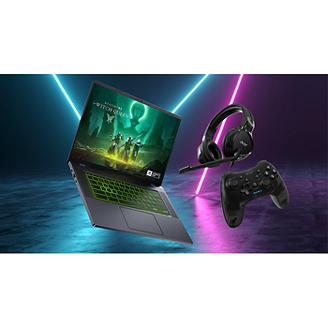
If you're looking for good budget gaming computers in 2026, this guide highlights five Acer gaming desktops and laptops that deliver excellent performance without venturing into enthusiast-level prices. Whether you're buying your first gaming machine or upgrading from an older system, these entry-level gaming PCs offer plenty of power for modern games without requiring a 4K obsession.
Getting into PC gaming doesn't mean you need a liquid-cooled monster capable of pushing every game at ultra settings. For most players, a good entry-level gaming PC is all about finding the sweet spot between price and performance. These machines can handle today's biggest games, tackle school or work during the day, and still have enough muscle left for late-night gaming sessions.
What's an entry-level gaming PC?
The term "entry-level" can be misleading. It doesn't mean weak or outdated—it simply means focusing on smooth 1080p and 1440p gaming without spending thousands of dollars. If you're happy with high settings and don't need to play everything at 4K with every ray tracing option maxed out, you're exactly where most gamers are.
Today's entry-level graphics cards are remarkably capable. Systems equipped with GeForce RTX 5050, RTX 5060, and RTX 5070 GPUs, along with previous-generation favorites like the RTX 4050, RTX 4060, and RTX 4070, offer excellent performance. AMD's Radeon RX 9060 and RX 9060 XT provide similarly strong value. Enough tech waffle! Let's check out five Acer entry-level gaming PCs.
1. Acer Nitro 14 Gaming Laptop (AN14-41-R74Z)
The Acer Nitro 14 Gaming Laptop (AN14-41-R74Z) shows that a good entry-level gaming PC doesn't have to be huge—or expensive. Recently reduced from $1,249.99 to $1,149.99, this compact machine packs an AMD Ryzen 7 8845HS processor and GeForce RTX 4060 graphics, giving it enough muscle to handle modern games with ease. The RTX 4060 remains one of the sweet spots for 1080p gaming and can even stretch into 1440p territory, while the fast 120 Hz display helps everything feel smooth and responsive. Whether you're battling through Marvel Rivals, exploring Monster Hunter Wilds, or spending far too much time in Call of Duty, the Nitro 14 delivers serious gaming performance without demanding enthusiast-level money.
If you're looking for a solid entry level gaming PC, the Nitro 14 strikes an excellent balance between power and portability. Weighing just 4.45 pounds, it's easy to slip into a backpack and take between home, school, or work, making it ideal for gamers who need one machine that can do it all. The 16 GB of LPDDR5X memory and speedy SSD keep everyday tasks feeling snappy, while the roomy 16:10 display provides extra screen space for both gaming and productivity. In short, this is the kind of good budget gaming computer that nails the fundamentals: strong performance, manageable size, and a price that leaves enough room in the budget for your next Steam sale impulse purchase.
* Processor: AMD Ryzen 7 8845HS (8 cores, up to 5.1 GHz)
* Graphics: NVIDIA GeForce RTX 4060 with 8 GB GDDR6
* Display: 14.5-inch WUXGA (1920 × 1200) IPS, 120 Hz
* Memory: 16 GB LPDDR5X
* Storage: 512 GB PCIe NVMe SSD
* Battery: 76 Wh
* Connectivity: Wi-Fi 6, Bluetooth, HDMI, four USB ports, microSD card reader
* Weight: 4.45 lbs
2. Acer Nitro V 16 AI Gaming Laptop (ANV16-61-R9MV)
The Acer Nitro V 16 AI Gaming Laptop (ANV16-61-R9MV) brings next-generation hardware into the entry-level gaming space, and it's now even more tempting thanks to a price drop from $1,299.99 to $1,199.99. Powered by an AMD Ryzen 7 processor and GeForce RTX 5060 graphics with 8 GB of GDDR7 memory, this Copilot+ PC is ready for far more than casual gaming. The RTX 5060 delivers excellent 1080p performance and enough horsepower to tackle demanding titles for years to come, while the spacious 16-inch display and lightning-fast 180 Hz refresh rate help competitive games look exceptionally smooth.
Whatever games you play, the Nitro V 16 AI is a good entry level gaming laptop. Its larger chassis and 5.36-pound weight make it more of a portable battlestation than an ultraportable laptop, giving the hardware plenty of room to breathe. The roomy 1 TB SSD means fewer uninstall decisions, while 16 GB of DDR5 memory and a battery rated for up to 10 hours make it equally comfortable handling work, school, and late-night gaming sessions. In short, this good budget gaming computer offers a lot of modern hardware for the money without creeping into enthusiast territory.
* Processor: AMD Ryzen 7 350 processor (8 cores, up to 5.0 GHz)
* Graphics: NVIDIA GeForce RTX 5060 with 8 GB GDDR7
* Display: 16-inch WUXGA (1920 × 1200) IPS, 180 Hz
* Memory: 16 GB DDR5 SDRAM
* Storage: 1 TB PCIe Gen4 NVMe SSD
* Battery: 76 Wh, up to 10 hours
* Connectivity: Wi-Fi 6, Gigabit Ethernet, Bluetooth 5.3, HDMI, four USB ports, microSD card reader
* Weight: 5.36 lbs
3. Acer Nitro V 16S AI Gaming Laptop (ANV16S-61-R3Z0)
The Acer Nitro V 16S AI Gaming Laptop (ANV16S-61-R3Z0) sits right at the upper edge of what we'd consider entry-level, bringing GeForce RTX 5070 graphics and a gorgeous 16-inch WQXGA display to the party. While it commands a higher price tag than some of its siblings, you're getting a lot of gaming goodness for the money. For $1,649.99, you get a gaming laptop that balances powerful components with everyday versatility. The RTX 5070 with GDDR7 memory opens the door to high-refresh 1440p gaming, while the 2560 x 1600 panel and 180 Hz refresh rate mean your games have plenty of room to shine. For players who want something a bit more special without wandering into enthusiast territory, this machine makes a compelling argument.
If your definition of the best entry level gaming laptop includes some extra horsepower and a sharper screen, the Nitro V 16S AI delivers the goods. Despite packing a powerful GPU, it tips the scales at just 4.63 pounds and measures under 0.8 inches thick, making it surprisingly easy to carry around. The 1 TB SSD provides ample space for an ever-expanding Steam library, while 16 GB of DDR5 memory and an eight-core Ryzen 7 processor keep everything running smoothly behind the scenes. In short, this good budget gaming computer feels like an overachiever, a machine that's perfectly happy playing today's games but also has enough headroom to keep pace with tomorrow's.
* Processor: AMD Ryzen 7 350 processor (8 cores, up to 5.0 GHz)
* Graphics: NVIDIA GeForce RTX 5070 with 8 GB GDDR7
* Display: 16-inch WQXGA (2560 × 1600) IPS, 180 Hz
* Memory: 16 GB DDR5 SDRAM
* Storage: 1 TB PCIe Gen4 NVMe SSD
* Battery: 76 Wh, up to 6 hours
* Connectivity: Wi-Fi 6, Gigabit Ethernet, Bluetooth 5.3, HDMI, four USB ports, microSD card reader
* Weight: 4.63 lbs
4. Acer Nitro 60 Gaming Desktop (N60-651-UR21)
The Acer Nitro 60 Gaming Desktop (N60-651-UR21) is proof that desktop gaming still offers tremendous value. Equipped with an Intel Core Ultra 5 225F processor, GeForce RTX 5060 graphics, and 16 GB of DDR5 memory, this tower has all the ingredients needed for smooth 1080p gaming and enough headroom to stretch into 1440p when the mood strikes. Better yet, the larger chassis and 650W 80 Plus Gold power supply provide plenty of breathing room, making the Nitro 60 a great platform for future upgrades. If you'd rather game at a desk with a proper monitor and full-size peripherals, this machine makes a lot of sense.
Anyone searching for a good entry level gaming desktop should appreciate what desktops bring to the table. Unlike laptops, you're not paying a premium for portability, which means more of your money goes directly into performance. The roomy 1 TB SSD means there's space for an impressive collection of games, while Wi-Fi 6E, 2.5Gb Ethernet, and Bluetooth 5.3 ensure the Nitro 60 is ready for everything from competitive multiplayer to streaming and content creation. With a price of $1,449.99, it's a great choice for players looking to step into high-performance PC gaming without reaching flagship prices. In many ways, this is the classic gaming PC experience: solid hardware, upgrade potential, and enough horsepower to keep your Steam backlog growing faster than you can clear it.
* Processor: Intel Core Ultra 5 225F (10 cores)
* Graphics: NVIDIA GeForce RTX 5060
* Memory: 16 GB DDR5 SDRAM
* Storage: 1 TB PCIe 4.0 NVMe SSD
* Connectivity: Wi-Fi 6E, 2.5Gb Ethernet, Bluetooth 5.3
* Expansion: Two 3.5-inch bays and two internal 2.5-inch bays
* Power Supply: 650W 80 Plus Gold
* Weight: 19.6 lbs
5. Acer Nitro 85 Gaming Desktop (N85-600-UR35)
The Acer Nitro 85 Gaming Desktop (N85-600-UR35) stretches the definition of entry-level, but that's exactly what makes it so appealing. Armed with a 20-core Intel Core Ultra 7 265F processor and GeForce RTX 5070 graphics with 12 GB of GDDR7 memory, this tower has enough grunt to tackle just about anything you throw at it. While some gamers will be perfectly happy with an RTX 5060 system, the Nitro 85 adds extra breathing room for higher resolutions, heavier workloads, and future releases. Throw in an 850W 80 Plus Gold power supply and plenty of expansion space, and you've got a machine that's ready to grow alongside your gaming ambitions. In short, if you're investing $1,999.99 in a gaming PC, this configuration delivers the performance needed for both current and future game releases.
If your idea of the best entry level gaming PC involves buying once and enjoying years of smooth gaming, the Nitro 85 deserves a long look. This is the kind of desktop that can spend the evening blasting through Black Myth: Wukong or Helldivers 2, then turn around and handle streaming, editing, or productivity duties without breaking a sweat. Wi-Fi 7, Bluetooth 5.4, and 2.5Gb Ethernet keep things firmly planted in the modern era, while the 1 TB SSD and 16 GB of DDR5 memory provide a solid foundation right out of the box. It may be the heavyweight of this lineup in more ways than one, but for gamers who want serious horsepower without stepping into enthusiast madness, the Nitro 85 is a fitting finale.
* Processor: Intel Core Ultra 7 265F (20 cores, up to 5.3 GHz)
* Graphics: NVIDIA GeForce RTX 5070 with 12 GB GDDR7
* Memory: 16 GB DDR5 SDRAM
* Storage: 1 TB PCIe 4.0 NVMe SSD
* Connectivity: Wi-Fi 7, 2.5Gb Ethernet, Bluetooth 5.4
* Expansion: Two 3.5-inch bays and two internal 2.5-inch bays
* Power Supply: 850W 80 Plus Gold
* Weight: 28 lbs
Final thoughts on entry level gaming PCs
We hope you enjoyed our look at some of the best entry-level gaming PCs from Acer. As we've seen, "entry-level" doesn't mean settling for weak hardware—it simply means focusing on the sweet spot where price and performance meet. Whether you prefer the portability of the Nitro 14, the larger displays offered by the Nitro V series, or the upgrade-friendly nature of the Nitro 60 and Nitro 85 desktops, there's a machine here capable of delivering years of enjoyable gaming.
Ultimately, a good budget gaming computer isn't about chasing 4K ultra settings or spending a fortune. It's about finding a gaming PC that lets you jump into your favorite titles, tackle everyday tasks, and still leave enough room in the budget for the next Steam sale. In that respect, every system on this list proves that getting started with PC gaming has never looked better.
FAQs
What’s a good entry level gaming PC?
A good entry-level gaming PC is one that offers smooth 1080p or 1440p gaming without requiring enthusiast-level spending. Systems equipped with graphics cards such as the GeForce RTX 4060, RTX 5060, or RTX 5070 are excellent choices for most gamers.
What games can an entry-level gaming PC play?
Modern entry-level gaming PCs can comfortably run popular titles such as Marvel Rivals, Call of Duty, League of Legends, Helldivers 2, Fortnite, and Black Myth: Wukong. Settings and frame rates will vary depending on the hardware.
Is a gaming laptop or desktop better?
Gaming laptops offer portability and flexibility, while desktops generally provide better upgrade options and cooling. The right choice depends on how and where you plan to play.
How much RAM should an entry-level gaming PC have?
For 2026, 16 GB of DDR5 memory is a great starting point. It provides enough headroom for modern games, multitasking, and everyday productivity.
Is an RTX 5060 good for gaming?
Yes. The GeForce RTX 5060 is an excellent GPU for 1080p gaming and can even deliver strong performance at 1440p in many titles. It strikes a great balance between price and performance.
Recommended Products
Acer Nitro V 16S AI Buy Now
Acer Nitro 60 Buy Now
Acer Nitro 85 Buy Now
-
What Is an eSIM? How It Works, and the Security Risks You Should Know About
An eSIM is a digital SIM card built directly into your device, allowing you to activate mobile plans without inserting a physical SIM card. This guide explains how eSIM technology works, the differences between eSIMs and traditional SIM cards, and why they have become popular for international travel. It also examines recent security research that found some travel eSIM providers route user traffic through unexpected third-party networks, discusses the privacy implications of those findings, and outlines practical ways to better protect your data while traveling. Whether you're choosing a travel eSIM, considering a local physical SIM, or looking for a more secure solution like a dedicated 5G mobile hotspot, this guide helps you understand the benefits, risks, and best practices for staying connected abroad.
If you've bought a new phone or planned an overseas trip recently, you've probably run into the term eSIM. An eSIM (embedded SIM) is a digital SIM card built directly into your phone's hardware. It does everything a physical SIM card does, just without the plastic chip. Instead of swapping cards, you download a carrier profile in minutes by scanning a QR code.
That convenience has made eSIMs the go-to choice for international travelers. But new research suggests that convenience can come at a cost: in May 2026, security findings reported in Taiwan revealed that many popular travel eSIMs quietly route user data through networks you'd never knowingly choose, based on a peer-reviewed study presented at the USENIX Security Symposium.
In this guide, we'll cover what an eSIM is, how eSIM technology works, what the latest research says about eSIM security risks, and what to do instead if you value your privacy.
What is an eSIM?
An eSIM (short for embedded Subscriber Identity Module) is a programmable SIM chip soldered directly onto your device's motherboard. Like a traditional SIM card, it identifies you to a mobile network so you can make calls, send texts, and use mobile data. The difference is that an eSIM is rewritable software: you can download, switch, and store multiple carrier profiles on a single device without ever opening a SIM tray.
Most flagship phones released since 2018 support eSIM, including iPhones, Samsung Galaxy, and Google Pixel devices, and some newer models in certain markets have dropped the physical SIM tray entirely.
eSIM vs. physical SIM: key differences
eSIM
Physical SIM
Form
Chip embedded in the device
Removable plastic card
Setup
Scan a QR code or use an app
Insert card manually
Switching carriers
Download a new profile in minutes
Buy and swap a new card
Multiple plans
Store several profiles at once
One plan per card
If your phone is stolen
Can't be removed by a thief
Can be pulled and discarded
How does an eSIM work?
An eSIM works through a process called remote SIM provisioning. Here's the simplified version:
* You purchase a plan from a carrier or travel eSIM provider, who issues a QR code or activation code.
* Your phone downloads the carrier profile, a small encrypted file containing your subscriber identity and network credentials, onto the embedded chip.
* The profile activates, and your phone connects to the carrier's network exactly as it would with a physical SIM.
* You can store multiple profiles and toggle between them in your settings. For example, you can keep your home number active while using a local data plan abroad.
For travelers, the appeal is obvious: land in a new country, scan a code, and you're online before you reach baggage claim, often at a fraction of the cost of international roaming.
But here's the part most people never think about: when you install an eSIM profile, you're trusting an invisible chain of network operators with your data. And recent research shows that chain doesn't always go where you'd expect.
Are eSIMs a security risk? What the latest research found
In May 2026, the Taipei Times reported on warnings raised by Taiwanese technology executive Nathan Chiu, who highlighted a study by Northeastern University researchers, "eSIMplicity or eSIMplification? Privacy and Security Risks in the eSIM Ecosystem," presented at the 34th USENIX Security Symposium. The research team purchased 25 travel eSIMs popular with international tourists and analyzed where each one actually sent its network traffic.
The findings were eye-opening:
Your traffic may be routed through countries you've never visited. Nearly all of the tested eSIMs showed IP addresses in locations that didn't match where the user actually was. In one example cited in the report, customers of a well-known Ireland-based eSIM brand were assigned IP addresses belonging to a Hong Kong-based subsidiary of China Mobile.
Hidden connections can be established without your knowledge. According to the findings, some eSIM profiles used the SIM application toolkit to silently open connections to overseas servers and receive text messages from foreign numbers, all invisible to the user.
Sensitive metadata travels with your traffic. The data routed through these third-party core networks reportedly included identifiers like your IMSI (subscriber identity), IMEI (device identity), location history, browsing behavior, and DNS queries.
Legal jurisdiction matters. The report noted that telecom operators registered in Hong Kong are subject to China's Cybersecurity Law and National Intelligence Law, which compel cooperation with state intelligence agencies. In other words, the question isn't just whether your eSIM provider protects your data. It's which country's laws govern the networks your data passes through.
There's a practical side effect, too: if your traffic exits through an IP address in China, Hong Kong, or Macau, services like ChatGPT, Claude, or Gemini may simply refuse to work, even though you're physically sitting in Tokyo or Paris. Many travelers blame their hotel Wi-Fi and never realize their eSIM is the culprit.
To be clear: the eSIM standard itself is not broken. The embedded chip and its encryption are sound technology. The risk lies in the business layer: which networks a budget eSIM reseller leases capacity from, and where your packets travel before reaching the open internet.
If you value your privacy, do this instead
You don't have to give up the convenience of staying connected abroad. You just need to be deliberate about how. Here are four steps, from baseline protection to the most secure setup.
1. Always use a VPN
A VPN (virtual private network) encrypts your traffic before it leaves your device, so even if your data is routed through an untrusted core network, the operators along the way see only encrypted packets rather than your browsing activity, DNS queries, or destinations. A VPN won't hide all metadata (your device still registers on the cellular network), but it dramatically shrinks what intermediaries can see. Treat it as non-negotiable on any travel connection, eSIM or otherwise.
If you're not sure which VPN to use, check out our article on the best no-log VPNs in 2026.
2. Buy eSIMs only from reputable providers
The Northeastern study tested budget travel eSIMs, exactly the kind sold through ads promising "5GB for $3." Cheap resellers often lease capacity from whichever wholesale network is cheapest, with little transparency about routing. Choose established providers that publish clear privacy policies and have a reputation to protect. Saily, for example, is run by the team behind NordVPN and bundles VPN-grade protection with its travel eSIMs, a sensible pairing given everything above. Whoever you choose, a provider's privacy practices should weigh at least as heavily as its price per gigabyte.
3. Consider a physical SIM from a local carrier
It sounds old-school, but buying a prepaid physical SIM from a licensed local telecom at your destination keeps your traffic on that country's regulated domestic network, with no opaque international resale chain in between. Major national carriers sign direct interconnection agreements and operate under local telecom law and oversight. The trade-offs are real (airport queues, ID registration requirements, fiddling with a SIM ejector tool), but for privacy-conscious travelers, knowing exactly whose network you're on is worth the friction.
4. Use a mobile hotspot as a security buffer between the network and your phone
The most robust option is to take your phone off the cellular network entirely and put dedicated hardware in between. A 5G mobile hotspot like the Acer Connect M6E 5G Mobile WiFi acts as an intermediary between the carrier and your personal devices:
* Your phone's identity never touches the foreign network. The SIM or virtual SIM lives in the router, so it's the router's identifiers that register with the local carrier, not your phone's IMEI or your personal number.
* One protected connection for every device. The M6E connects to 5G networks in 135+ countries and shares the connection over a WiFi 6E hotspot secured with WPA3 encryption, a built-in firewall, SIM lock, and VPN support, so your phone, laptop, and tablet all sit behind the same protective layer.
* Always patched. Automatic software and firmware updates keep the device hardened against new threats without you having to think about it.
* Built for the road. With up to 28 hours of battery life, IP68 water and dust resistance, and military-grade durability, it's designed for exactly the kind of travel where connection security matters most.
Pair the M6E with a VPN running at the router level, and every device you carry gets encrypted, identity-shielded connectivity from a single piece of hardware.
The bottom line on eSIM security
eSIMs are a genuinely useful technology: convenient, flexible, and here to stay. But the 2026 research is a reminder that "connected in seconds" can also mean "routed through networks you never agreed to." Before your next trip: install a VPN, choose providers with transparent privacy practices, and for the strongest protection, put dedicated hardware like the Acer Connect M6E between your devices and the network.
Your data will travel with you either way. Make sure you decide who gets to see it.
Frequently asked questions
What is an eSIM in simple terms?
An eSIM is a digital SIM card built into your phone. Instead of inserting a plastic card, you download your mobile plan by scanning a QR code. It does everything a regular SIM does (calls, texts, and data) without the physical chip.
How does an eSIM work when traveling?
You buy a data plan online from a carrier or travel eSIM provider, scan the QR code they send you, and your phone downloads the carrier profile. You're connected to a local network on arrival, without visiting a store or swapping SIM cards.
Are eSIMs safe to use?
The eSIM standard itself is secure: profiles are encrypted and can't be physically stolen like a SIM card. The risk lies with some providers. 2026 research found that many budget travel eSIMs route user traffic and metadata through third-party networks in other countries without the user's knowledge.
Is an eSIM more secure than a physical SIM?
In some ways, yes. An eSIM can't be removed by a thief and is harder to clone or swap. But a physical SIM from a licensed local carrier keeps your traffic on a regulated domestic network, which can offer better privacy than a cheap travel eSIM with opaque routing.
How can I protect my privacy when using an eSIM?
Use a VPN at all times, buy only from reputable eSIM providers with clear privacy policies, or route your connection through a secure mobile hotspot like the Acer Connect M6E so your phone's identifiers never register on the foreign network.
Why can't I access ChatGPT or other apps with my travel eSIM?
Some travel eSIMs route traffic through IP addresses in China, Hong Kong, or Macau, where certain US-based AI services are unavailable. The services see your exit IP location rather than where you physically are, and block the connection.
Recommended Products
Acer Connect M6E 5G Mobile WiFi
Buy Now
Predator Connect T7 Wi-Fi 7 Mesh Router
Buy Now
Acer Connect Vero W6m W-Fi 6E Mesh Router
Buy Now
-
How to Connect an AV Receiver to Your PC (HDMI & Non-HDMI Guide)
To connect an AV receiver (AVR) to your PC, run an HDMI cable from your graphics card's HDMI output to one of the receiver's HDMI inputs, then set the receiver as your default audio device in Windows. If your receiver is older and doesn't have HDMI, you can use an optical (TOSLINK) cable, a coaxial digital cable, or analog RCA cables from your PC's audio output instead. Once connected, wire your speakers to the receiver's binding posts, matching channels and polarity.
That's the short version. Below, we'll walk through every step in detail, including what an AV receiver actually is, why pairing one with your computer is one of the biggest audio upgrades you can make, and exactly how to hook everything up whether your receiver is brand new or twenty years old.
What is an AV receiver (AVR)?
An AV receiver, short for audio/video receiver, is the central hub of a home theater system. It performs three jobs at once:
* Switching: It accepts audio and video signals from multiple sources (PC, game console, Blu-ray player, streaming box) and routes them to your display and speakers.
* Processing: It decodes audio formats like Dolby Digital, DTS, Dolby Atmos, and multichannel PCM, splitting the signal into separate channels for surround sound.
* Amplification: It powers your speakers directly, with far more clean wattage than any motherboard audio jack or soundbar can deliver.
Think of it as a traffic controller, translator, and power plant for your entertainment setup, all in one box.
Why connect an AV receiver to a PC?
If you already own an AVR, or you've spotted one cheap at a thrift store, connecting it to your computer unlocks serious benefits:
* Dramatically better sound quality. A receiver driving real bookshelf or tower speakers will outperform virtually any desktop speakers or gaming headset at the same price.
* True surround sound for gaming and movies. Modern receivers decode 5.1, 7.1, and Dolby Atmos, so games and films sound the way they were mixed to sound.
* More power and volume headroom. Receivers typically deliver 70 to 150 watts per channel, which means clean, distortion-free sound even at high volumes.
* One hub for everything. Plug your PC, console, and streaming devices into the receiver and switch between them with one remote.
* A second life for older gear. Even a 15-year-old stereo receiver can turn your PC into a genuinely impressive music system.
In short: if you care about how your games, movies, and music sound, an AVR is the single biggest upgrade path available to a desktop PC user.
What you'll need before you start
* A desktop or laptop PC with an available video or audio output (HDMI, DisplayPort, USB-C, optical, or a 3.5 mm headphone jack)
* An AV receiver (any era; we cover both HDMI and legacy models below)
* The right cable for your connection type (HDMI, TOSLINK optical, coaxial, or 3.5 mm-to-RCA)
* Speakers and speaker wire (14- or 16-gauge wire works for most rooms)
* 15 to 30 minutes
Method 1: connect a PC to an AV receiver with HDMI (newer receivers)
HDMI is the best way to connect a modern receiver to your PC. A single cable carries lossless multichannel audio and video, supports every surround format including Dolby Atmos, and requires almost no configuration.
Step 1: find the HDMI output on your PC
* Desktop: Use the HDMI port on your graphics card (the ports near the bottom of the case, oriented horizontally), not the motherboard's HDMI port, if you have a dedicated GPU.
* Laptop: Use the built-in HDMI port, or a USB-C to HDMI adapter if your laptop only has USB-C/Thunderbolt ports.
Step 2: connect the HDMI cable to the receiver
Plug the cable into any HDMI IN port on the back of the receiver. Many receivers label inputs (Game, PC, BD, CBL/SAT), but the labels are just names, so any input works. Note which one you used.
Step 3: connect the receiver to your monitor or TV
Run a second HDMI cable from the receiver's HDMI OUT (ARC/eARC) port to your monitor or TV. The receiver passes the video through while handling the audio itself.
Tip for high-refresh gamers: Older receivers may limit pass-through to 4K/60 Hz. If your receiver can't pass your monitor's full resolution or refresh rate, connect your monitor directly to a second output on your graphics card and use the receiver for audio only. Windows lets you send audio to the HDMI output even if no display is using it for video.
Step 4: select the input on the receiver
Power on the receiver and use the input selector to choose the HDMI input you plugged your PC into.
Step 5: set the receiver as your audio device
On Windows 11:
* Right-click the speaker icon in the taskbar and choose Sound settings.
* Under Output, select your receiver (it usually appears by its brand name, e.g., "Denon AVR" or "NVIDIA High Definition Audio").
* Click Sound Control Panel → Playback, right-click the receiver, and choose Configure Speakers to set 5.1 or 7.1 and test each channel.
Step 6: test it
Play a video or run the Windows speaker test. If you hear sound from every speaker, you're done.
Method 2: connect a PC to an older AV receiver without HDMI
Receivers made before roughly 2006 often lack HDMI entirely, but they can still sound fantastic. You have three options, listed from best to most universal.
Option A: optical (TOSLINK), best for surround sound
Many PCs and motherboards include an optical S/PDIF output (a small square port, often with a flip-up door that glows red).
* Connect a TOSLINK optical cable from the PC's optical output to the receiver's OPTICAL IN.
* Select the matching input on the receiver.
* In Windows Sound settings, set the digital output (often labeled "Digital Audio (S/PDIF)") as your default device.
* For surround sound in games, open the device's Properties → Supported Formats and enable Dolby Digital and DTS, then enable encoding (Dolby Digital Live or DTS Connect) in your sound card's control panel if available.
Limitation: Optical carries uncompressed stereo or compressed 5.1 (Dolby Digital/DTS), but not lossless formats like Dolby TrueHD or Atmos.
No optical port on your PC? A USB-to-optical adapter (often sold as a "USB sound card with S/PDIF") costs little and works on both desktops and laptops.
Option B: coaxial digital, same quality as optical
Some PCs and receivers use a coaxial S/PDIF connection (a single orange RCA jack) instead of optical. It carries the identical digital signal. Just follow the optical steps with a 75-ohm coaxial cable instead.
Option C: analog RCA, works with any receiver ever made
This is the universal fallback, and for music it can sound excellent.
* Get a 3.5 mm to stereo RCA cable (one headphone-style plug on one end, red and white plugs on the other).
* Plug the 3.5 mm end into your PC's headphone/line-out jack (the green port on a desktop).
* Plug the red and white RCA plugs into any analog input on the receiver. CD, AUX, or TAPE IN all work. (Avoid the PHONO input; it's specially amplified for turntables and will sound distorted and far too loud.)
* Select that input on the receiver and set your PC's volume to about 80 to 90%, controlling final volume with the receiver knob.
Limitation: Analog RCA from a headphone jack is stereo only. For surround on a non-HDMI receiver with 5.1 multichannel analog inputs, you'd need a sound card with matching 5.1 analog outputs and three 3.5 mm-to-RCA cables. It's a niche but workable setup for enthusiasts.
How to connect speakers to your AV receiver
With the PC side handled, the final step is wiring your speakers to the receiver.
Step 1: plan your layout
* 2.0 / 2.1 (stereo): Front left + front right, optional subwoofer. Perfect for desks.
* 5.1 surround: Front left/right, center, two surrounds, subwoofer.
* 7.1 and beyond: Adds rear surrounds (and height channels for Atmos).
Step 2: cut and strip your speaker wire
Cut a length of 14- or 16-gauge speaker wire for each speaker, leaving slack. Strip about 1 cm (3/8") of insulation from both ends of each conductor and twist the bare copper strands tight.
Step 3: mind the polarity
Every speaker connection has a positive (+, usually red) and negative (−, usually black) terminal. Speaker wire is marked to tell the two conductors apart with a stripe, ribbing, or copper vs. silver coloring.
Connect + to + and − to −, on both the receiver and the speaker. Reversed polarity won't damage anything, but it puts the speaker "out of phase," which hollows out the bass and smears the stereo image.
Step 4: connect each speaker to its matching terminal
On the back of the receiver you'll find labeled terminal pairs: FRONT L, FRONT R, CENTER, SURROUND L, SURROUND R, and so on.
* Binding posts: Unscrew the cap, insert the bare wire through the hole in the post, and screw the cap down snugly. (Banana plugs make this even easier if your posts accept them.)
* Spring clips: Press the tab, insert the wire, and release.
Make sure no stray copper strands touch the neighboring terminal. A single whisker bridging + and − can trigger the receiver's protection mode or damage the amplifier.
Step 5: connect the subwoofer
Powered subwoofers use a single RCA cable from the receiver's SUB OUT / LFE jack to the subwoofer's LFE IN. Plug the sub into wall power and set its crossover dial to max or "LFE" (the receiver will manage the crossover).
Step 6: run the receiver's setup
Modern receivers include automatic room calibration (Audyssey, YPAO, MCACC, Dirac). Plug in the included microphone, place it at ear height in your listening position, and run the routine. On older receivers, set speaker sizes, distances, and levels manually in the setup menu, or just balance levels by ear with the test tone.
Troubleshooting: no sound from the receiver?
* Check the default audio device. Windows loves to switch outputs after updates or reboots. Right-click the speaker icon → Sound settings → confirm the receiver is selected.
* Check the receiver input. The most common culprit: the receiver is simply set to the wrong source.
* HDMI shows video but no audio? In Windows Sound settings, the display's audio device may be selected instead of the receiver's. Choose the entry that names your receiver.
* Receiver disappears when the PC sleeps? This is normal HDMI behavior. Disabling "allow the computer to turn off this device" in Device Manager for the GPU audio device can help.
* Hum or buzz on analog connections? Usually a ground loop. Try plugging the PC and receiver into the same wall outlet or power strip.
* One speaker silent? Swap the speaker wire to a known-working channel to isolate whether the issue is the speaker, the wire, or the receiver channel.
The bottom line
Connecting an AV receiver to your PC takes one cable and a few settings changes, but the payoff is huge. Instead of relying on small desktop speakers or a headset, you get real amplification, real speakers, and real surround sound for games, movies, music, and streaming. Use HDMI if your receiver supports it, or use optical, coaxial, or RCA if you are connecting to an older receiver. Once your speakers are wired correctly and your receiver is calibrated, your PC can become the center of a full entertainment setup.
That setup works best when the computer behind it is just as capable as the audio system. A powerful receiver and speaker setup can make games and movies feel more immersive, but the PC still has to handle the heavy lifting: running modern games smoothly, pushing high-resolution visuals, managing surround sound output, streaming media, and keeping background apps from slowing everything down.
For that kind of setup, the Acer Nitro 60 Gaming Desktop is a strong match. It comes with Windows 11 Home, an Intel® Core™ Ultra 5 processor 225F, NVIDIA® GeForce® RTX 5060 graphics, 16 GB of DDR5 memory, and a 2 TB PCIe® 4.0 NVMe™ SSD. That gives you the performance headroom for modern PC gaming, high-resolution entertainment, fast loading, and smooth multitasking.
It also includes Wi-Fi 6, Gigabit Ethernet, and Bluetooth 5.3, making it easier to connect online, stream content, use wireless accessories, and keep your gaming or media setup flexible. Pair the Nitro 60 with a capable AV receiver and proper speakers, and your desktop is no longer just a computer. It becomes the core of a high-performance gaming and home theater system.
Frequently asked questions
Can I connect my PC to an AV receiver without HDMI?
Yes. Use an optical (TOSLINK) or coaxial digital cable for surround-capable digital audio, or a 3.5 mm-to-RCA analog cable for stereo. Both work with receivers that predate HDMI, and USB adapters can add an optical output to any PC that lacks one.
Does connecting through a receiver add input lag for gaming?
HDMI pass-through adds a few milliseconds at most on modern receivers, which is imperceptible for nearly all gamers. If you're chasing every millisecond or need a refresh rate the receiver can't pass through, connect your monitor directly to the GPU and use the receiver for audio only.
Can I get Dolby Atmos from my PC?
Yes, over HDMI to an Atmos-capable receiver. Enable Dolby Atmos in Windows under Sound settings → Spatial audio (the Dolby Access app handles licensing for some configurations). Optical and analog connections cannot carry Atmos.
Can a laptop connect to an AV receiver?
Absolutely. Use the laptop's HDMI port, a USB-C-to-HDMI adapter, the headphone jack with a 3.5 mm-to-RCA cable, or a USB audio interface with optical out. The steps are identical to a desktop.
What speaker wire gauge should I use?
16-gauge is fine for runs under about 15 m (50 ft); use 14-gauge for longer runs or low-impedance (4-ohm) speakers. Thicker wire never hurts — it just costs slightly more.
Is an old stereo receiver from the 1990s still worth using with a PC?
Often, yes. Vintage receivers frequently have robust amplifier sections that drive bookshelf speakers beautifully. Connect via the analog RCA method and you've got a high-quality desktop music system for the price of one cable.
Recommended Products
Predator Orion 6000
(RTX 5080)
Buy Now
Acer Nitro 85
(RX 9070XT)
Buy Now
Acer Nitro 60
(RTX 5060)
Buy Now